Restaurants Are Great at Being Talked About and Terrible at Talking Back
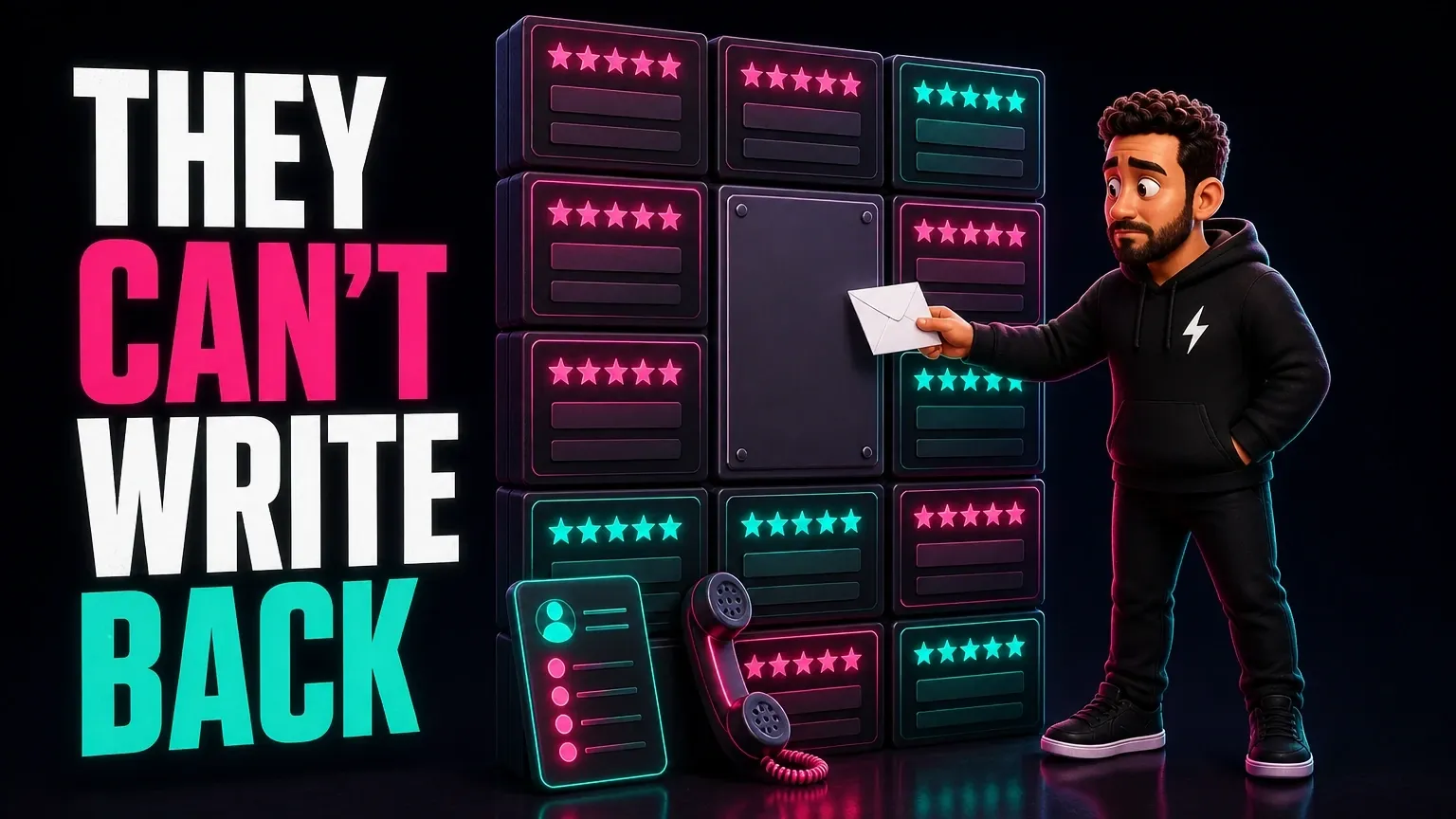
97.8% of the restaurants I sampled hold a Google review. Only 8.8% of their homepages can take a message. Everybody talks about you and nobody can write to you.

For about six years I told restaurant owners to skip the contact form.
I had a tidy argument ready, too. You take bookings through a table app. You take orders through a delivery platform. One more inbox is one more thing nobody opens on a Friday night.
A caterer proved me wrong, and it cost her a party of forty.
What I saw when I put the reviews in order
Last month I ranked every trade I audit by how many Google reviews its businesses are carrying, then read the list from the top downward.
Restaurants sat second from the top of that ranking. 97.8% of the ones I sampled hold at least one Google review.
The average restaurant is carrying 778 of them, at 4.3 stars.
Read that middle number again. Seven hundred and seventy-eight people, phone in hand, typing out an opinion about someone’s cooking.
Your customers advertise you for free, on their own time, most nights of the week.
Telecom shops have to work for every review they own, and the best rated ones ask about ten minutes after the thing starts working. Nobody has ever had to prompt a table of four.
The website holds up its end on arrival, as well. Second from the top there too, since 85.3% of the sites I opened cleared Google’s mobile checks.
So the first ten seconds go beautifully. A stranger hears your name, reads the stars, taps through, and the page sits comfortably in her hand, once it has finished making her wait for it.
I got the eleventh second wrong.
The party of forty
Her name doesn’t matter. She ran a good room with a back space that seated forty, and I built her site the way I built all of them back then.
A menu, a map, a phone number, and a booking widget for tables of two to six.
No contact form. There was no box anywhere on that homepage where a stranger could type a paragraph and press send.
A woman spent a week trying to book her father’s retirement dinner in that back room. She called twice during service, got a busy line both times, and gave the party to a place four doors down.
My client heard the whole story nine months later. From the woman herself. At a party thrown by someone else.
Forty covers, one Saturday, gone because I had a tidy argument.
She never blamed me for it, which somehow made the whole thing worse. She assumed a restaurant website was a menu with a telephone number attached, because a menu with a telephone number attached was exactly what I had handed her.
What a booking widget can’t do
The objection I used to make is a real one, and it gets you halfway.
Plenty of restaurants take reservations through a table app living on another company’s website, so my audit lands on your homepage, finds no form, and marks you down while a perfectly good booking system hums along one tap later.
A booking widget only answers one question, though. Table for how many, and what time?
Now think about the messages your restaurant ought to be getting this month.
The woman organizing the back room. The office manager feeding twenty people on Thursday who needs it confirmed in writing. The mother asking whether your fryer touches anything with peanuts in it, before she risks a Saturday evening on you.
Not one of them is filling in a table-for-two dropdown.
8.8% of restaurant homepages have a contact form on them, against 28% nationally. So those messages arrive by telephone, in the middle of service, on a line your host is already holding for someone else, or they never arrive at all.
The complaint with nowhere to knock
Then there’s the customer I care about most.
The guy who waited fifty minutes for a main course last Friday.
He’s going to tell someone about it. The only live question is whether he tells you or he tells the internet.
Reviews land on your listing by the hundred, and there’s no private door for him to knock on. So he knocks on the loud one. It’s the only entrance anybody built.
Clinics carry that same shape and I only spotted it there afterwards, a listing covered in stars and almost nowhere on the website for an annoyed patient to type a sentence.
Can I prove a form would have saved that star? Not a chance, and I won’t pretend otherwise.
But I’ve watched enough owners turn a private complaint into a regular customer to believe the odds shift the moment an unhappy person has somewhere to vent that isn’t public.
An apology and a table beats a public reply beginning “We’re sorry to hear about your experience.” Nobody has ever believed one of those. Have you?
The other thing I stopped skipping
I asked an owner once how many people had opened his website that week. He gave me a number, then admitted he’d invented it on the spot.
He had no analytics on the site, so nothing had been counting who arrived, or noting which pages they read before they gave up and left.
56.2% of restaurant sites run analytics, against 58% nationally, so I can’t pin that one on restaurants alone.
You’d never work a dining room with your eyes shut, judging the evening by how tired your feet felt at midnight.
Yet plenty of restaurant websites get run exactly like that. Every year. Forever.
What I do differently now
The form goes on first. Before the menu, before the photography, before anyone argues with me about fonts, and it goes on every restaurant site I put together.
Then the counter goes on, so the owner can stop guessing about her own front door.
The industry lands at 71 out of 100, on a score built from ten weighted checks.
An ordinary number, and it hides a shape that isn’t ordinary in the least. Strangers write about you constantly, the site meets every one of them properly on a phone, and then there is nowhere for a single one of them to say a word to you in private. I’d never seen that shape on a trade before this one.
Try this before the weekend
Put a form on your homepage. Name, email address, one box that says “How was it?”
An afternoon of work, at the outside. Then read whatever comes in for a month.
Most of it will be dull. Opening hours, gift certificates, whether you do takeout on Mondays, a customer who left a scarf on a chair.
But one or two will be the complaint that was heading for a two-star review, and you get to answer that one with an apology and a free dessert instead of a paragraph the whole town can read.
Or skip the month of waiting. Send me your address and I’ll open the site myself, and I’ll tell you whether a stranger with a real question has anywhere to put it.