A Miami Baker Was Using Facebook as Her Website
76.0% of Miami businesses list a website, against 83% nationally. So I stopped building five page sites for first timers, and one bakery’s single page shows why.

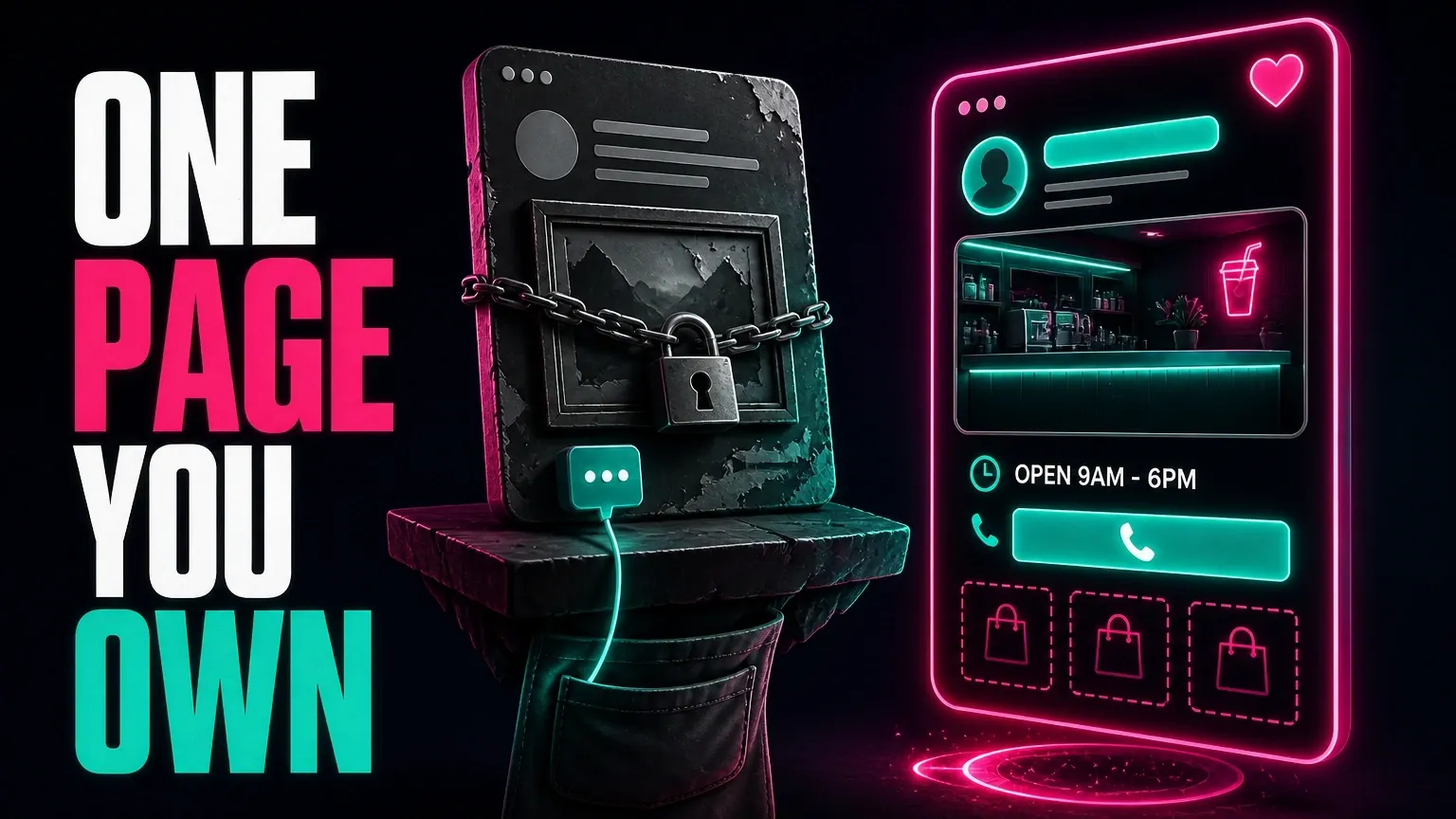
A first website should be one page. I turn the five page version down now, even when a Miami client asks for it by name and even when it pays me better.
I used to say yes. What happens is that pages two through five need words, the words need the owner, the owner is busy running an actual business with actual customers in it, and eleven weeks later there’s a folder on my laptop and nothing on the internet.
Then the owner feels guilty, and I feel like a nag, and the whole thing dies of politeness.
Money was never the reason either. The five page version costs a little more, but what kills it is that four of those pages are homework, and homework loses to a Saturday morning rush every single time.
So now I build one page. One. It goes live inside a week, and the other four stay imaginary until a real customer asks for them.
Have you got one of those folders yourself? A site that got quoted in February, started in March, and then went quiet, and every few months you think of it and wince?
Let me show you the last one I did, before and after, because both halves are easy to picture.
Before: a Facebook page carrying a load it was never built for
She bakes. Small shop, one counter, a glass case, two tables nobody really sits at.
When I asked where her website was, she said she had one, and she meant the page. Plenty of the owners I meet mean the page.
Her Facebook page had a cover photo from a summer two years earlier, with a birthday cake in it that she no longer made because the person who decorated it had moved away.
The hours in the About box hadn’t matched the door since the winter. Underneath them sat a pinned post from March announcing that Mondays were closed now, which was true in March and had stopped being true in June.
There was a Message button. It went to a phone that lived in an apron pocket during service, which is to say it went nowhere between six in the morning and two in the afternoon.
And the photographs, honestly, were lovely. Better than the ones on most of the websites I open, even though the city she works in lands 22 of 24 on that check, which is the part of this that keeps surprising me.
Nothing about her page was lazy. It was just a page belonging to someone else, doing a job it was never designed to do.
What a customer met instead
Picture a woman at nine at night, on a couch, typing the name of a cake into her phone because her daughter turns eleven on Saturday.
She finds the shop. She finds the cover photo of a cake that no longer exists, hours that might be wrong, and a message button that will be answered at some point tomorrow.
What does she do next? She taps the bakery underneath, and neither of them ever knows it happened.
How many of those did your business have last month? You have no way of knowing, and neither did she, which is what makes this the easiest problem in the world to live with for years.
Her Google listing pointed straight at that page, and plenty of listings around here point at something worse. Five minutes on your phone settles which kind yours is.
The number under all of this
She isn’t unusual. 76.0% of the Miami businesses I sampled list a website, where 83% do across everything I’ve counted.
That’s a lot of shops in one city whose entire presence is rented from a company that will redesign it on a Tuesday without asking anyone.
She had never owned an address. Every way a customer could reach her belonged to a platform, and the day the page layout changed she found out about it the same way her customers did.
New Orleans is thinner on this than anywhere else I’ve counted, and I ranked the reasons owners gave me there. One of the five holds up.
After: one page, and everything on it
Top of the screen, in the biggest type on the page, her name, what she bakes, and the neighborhood. No slogan. A stranger arriving from a search should not have to guess what building she is in or what she sells.
Under that, one sentence about what you can walk in and buy today.
Then a photograph of the counter at seven in the morning, taken on my phone, with the case full and the light coming in sideways. Not a stock photo of a croissant. Hers, that week.
Hours, written out as text. That mattered more than she expected, because her hours had spent two years living inside a picture, and a picture is a thing a phone can display but not read, so nobody could copy them, and Google had no way to answer the question when anyone asked it.
Address underneath, tappable, opening the map app.
Phone number, tappable, ringing the shop and not the apron.
Three boxes for a cake order: name, date, what you want on it. She reads them in the afternoon with a coffee.
None of that needed a project. It took an afternoon of me asking questions and a morning of her answering them, and every word on the page is hers, in the language she already uses across the counter.
At the very bottom, one short paragraph about her grandmother and the recipe, because she wanted it there and because it is the only thing on the page that no competitor can copy.
One address, hers, with her name on it and nobody else’s.
Keeping it right runs to about ten minutes a season. Nearly all of the upkeep a page like that needs is making sure the hours on it still match the ones on the door.
Go and read the biggest line on your own homepage. Could a stranger tell from that line alone what you sell and which street you sell it on?
Your version of that list would differ in the details and be identical in shape. Your name, one sentence, one real photograph, your hours, your address, your phone, and a way for a stranger to ask you for something.
I’ve built that page more times than I can count now, and I have never once finished one and wished it were longer.
What changed, and what didn’t
Traffic didn’t change much that first month. I want to be straight about that, because the before and after story I’m telling you would be more fun if I said it doubled.
What changed is that people started arriving already decided. She’d get a woman at the counter on a Saturday who already knew the price, the pickup time and that Mondays were open again.
The Facebook page is still there, still busy, still getting the photos of yesterday’s work. It just stopped being the only thing standing between her and a stranger with a birthday coming.
Worth linking to, as well, so long as you remember what Charleston taught me. Every icon in a footer is also an exit.
I believe in that version of the job. Not a rebuild, not a rescue, not a stranger talking you into a redesign you didn’t want. One page that exists, on an address you keep.
So whose address do your customers reach you at, and what happens to your business on the day that company decides to change how it works?
Most of the one page builds I take on for shops around this city start exactly where hers did, with a listing pointing at a platform and an owner who assumed a real website meant a project.
If you’ve never bought one and you want to know what it runs to before you talk to anybody, that lives on one page too.
What I’d do
If it were my shop, I’d give myself one week, one page and one photograph I took myself, and I’d let the other four pages wait until a customer asked me a question I couldn’t answer in a sentence.