Hospitality Describes Its Photos Better Than Any Industry I Audited
Hospitality describes 65.4% of its images where everyone else stops at 54.9%, first of the 47 industries I ranked. Two restaurants six doors apart, and a text box under the upload separated them.

Quarter past nine on a Tuesday night, and a woman is on the bus home with her phone in one hand.
She’s hunting through Google Images for a private room she can book for her mother’s seventieth, and she will scroll past forty photographs before her stop comes up.
Two of those photographs belong to a restaurant six doors down from yours. None of them belong to you.
I’ve audited both of those restaurants. Same street, same rent, same photographer, and I know that last part because the photo files carry the same watermark.
One of them can turn up in that scroll. The other one cannot, and the difference has nothing to do with the food or the money.
What separates them is a text box that takes about eleven seconds to fill in.
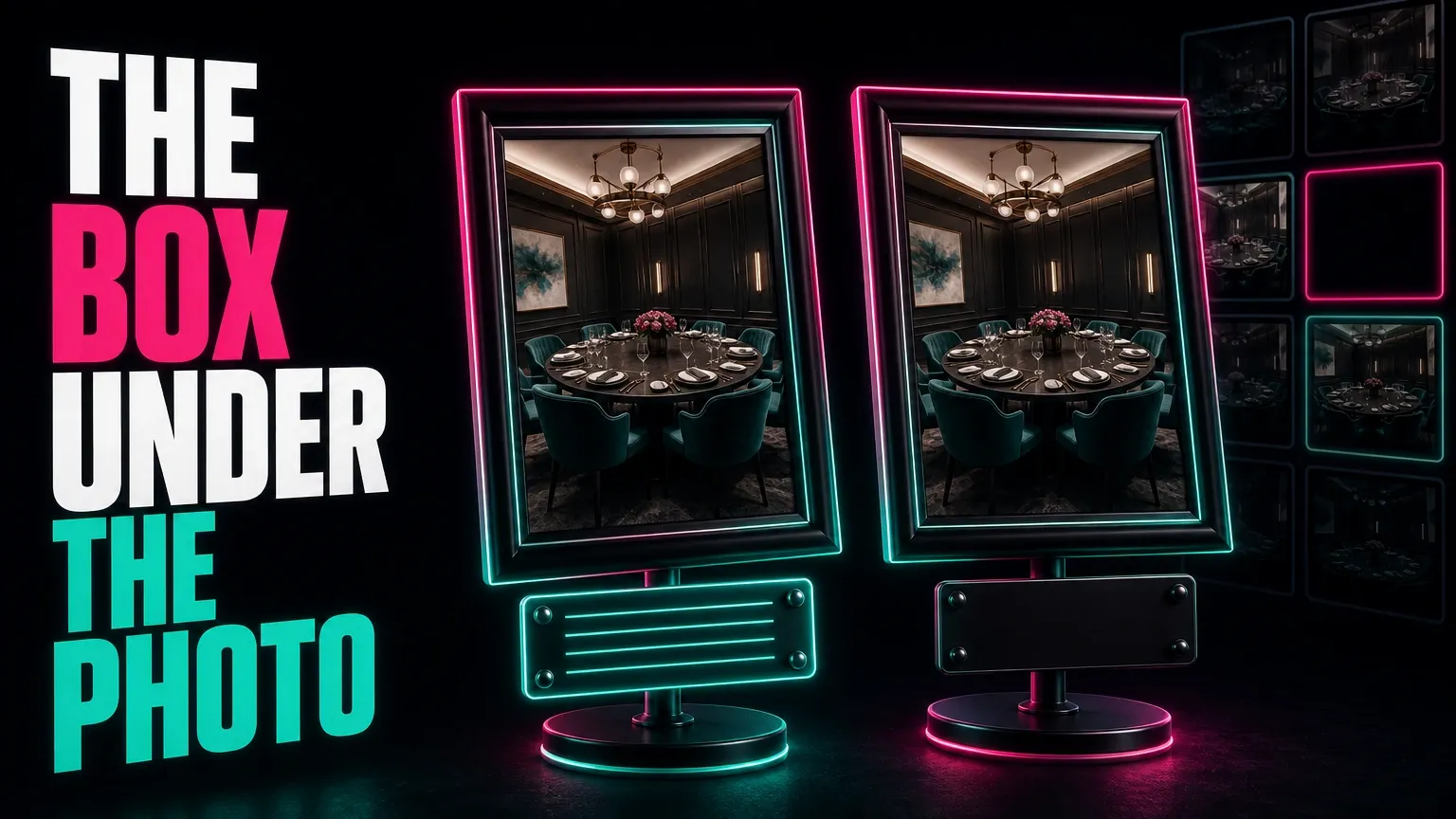
The box under the upload
When you upload a photograph into your own website, most tools open a small field underneath it. One of those fields is the alt text, and it asks you to type out what the picture shows.
The owner six doors down filled hers in. “Private dining room set for twelve, exposed brick, long walnut table.”
The other owner left every box empty and hit save, which took her considerably less time. Which of the two do you suppose thinks her web designer did a thorough job?
Nobody reads that line on the page. It sits in the code behind the picture and never appears anywhere a customer can see it.
But Google says outright that it uses the alt text to work out what an image is of, and a guest browsing with her screen turned into speech hears that line where the photograph should be. Leave it blank and she hears the word image, then nothing.
What the audit found
The average hospitality site describes 65.4% of its images, where the average across everything I audited stops at 54.9%.
That gap is wider than it looks, and I don’t believe for a second that it’s virtue.
The photograph is the product in this trade, which is the only explanation I can find for restaurants and hotels finishing first of all 47 industries I ranked.
Someone paid a photographer real money. Someone else uploaded those shots one at a time, cared about every one of them, and found the description box sitting right there underneath.
The trades that don’t care batch-upload forty images and hit save. I can see the difference in the code, and I read code all day.
Which of my two restaurants does your own site look like from the inside?
What the filled-in boxes actually buy
Three things, and I’d rank them in this order.
Someone in your city is searching right now for a rooftop patio, a private dining room, or a hotel pool that doesn’t look like a parking lot with water in it. Those searches land on described photographs, because they cannot land on a photograph a search engine is unable to read.
Then there’s the guest who can’t see your gallery, who has a birthday and an anniversary and a credit card like everybody else. Your competitor’s site is a wall of silence to her, and yours talks.
The third one matters most to me. A described photo means a human being was paying attention on the day that page got built, which is why it’s the first thing I look at when a restaurant or a hotel asks me to open their site up.
The rest of the code holds up too
The same care shows up elsewhere once you know where to look, and my careful restaurant cleared every one of these.
77.6% use schema markup, which is why a search result can show your hours and your price range before anyone has clicked anything, against 70.5% nationally.
The same is true of the plainest checks on the whole list, the ones a decent builder handles without being asked.
99.5% name the page properly in the browser tab and 78.7% put a real headline across the top of it, both ahead of the 99.1% and 73.7% I record nationally.
Nobody really loses that first one. Even the city that comes last of 24 cities on it is a rounding error behind everyone else, which tells you how much a builder hands over for free.
Every check in that stretch clears the national line. So why does the trade finish at 68 out of 100, in 44th place out of 47?
Part of the answer is the side gate. This trade locks its front door and then leaves the old unlocked address answering the phone.
The photograph nobody sees
Then I checked what your link turns into the moment a customer shares it, and I laughed before I winced.
Your link gets passed around constantly and you will never see most of it happen. Someone texts it to four friends arguing about dinner, or drops it into a work channel where six people are picking a hotel for a conference.
Open Graph tags are a separate set of tags whose only job is to name the picture, the headline and the line of text a chat app should display when your address gets pasted into it.
Hospitality manages them on 67.4% of its sites, which is a long way under the 75.7% I see everywhere else.
So a trade that describes every photograph on the page for a robot arrives in a friend’s group chat as a bare blue link with nothing attached to it.
Manufacturers do exactly the same thing, and they inspect every other part that leaves the building.
Your best salesperson is a customer recommending you to five people at once. Have you ever checked what those five people see?
And then the clock
Those same photographs have a second life, and it is not a flattering one.
I ran 1,258 hospitality pages through a speed test on a phone, and the average came back at 44 out of 100, against 58 across small business sites as a whole.
Nothing else came back lower than that. Do you know what yours is?
I’d bet the photographs are what’s dragging it, because they go up at full size and nobody ever resizes them. My audit never crossed those two checks against each other, so take that as my hunch rather than my evidence.
How long would you wait for a stranger’s menu to load outside a train station on two bars of signal? I give it about three seconds, and I’m being generous with myself.
One honest limit
My check counts whether a description exists, not whether the description is any good.
Plenty of what I found was probably DSC_4471 or the word image, which helps nobody at all, so I’d treat that rate as a sign of care rather than a certificate of quality, and you can see the sample it came off by picking hospitality in the explorer on the report and leaving the city box alone.
Want to know what your own descriptions say? Right-click any photo on your site, choose Inspect, and read the line that lights up in the code. Ugly, free, about thirty seconds.
Six doors apart
Two restaurants on one street, the same photographer, the same rent, the same food within a rounding error.
One of them appears when a stranger goes looking for a room to book for her mother’s birthday. The other one is a gallery nobody can find and nobody can hear.
The owner who filled the boxes in never once mentioned it to me. She assumed it was simply part of uploading a photograph, the way a caption is part of a postcard.
That habit is the unglamorous half of owning a website, and it never appears on anybody’s quote.
So which of those two hired the better web designer, and how would either of them ever have found out?