



24/7 emergency pest service
Make your emergency number prominent with click-to-call for urgent infestations like bed bugs or termites.
When someone has bed bugs or sees termites, they need help TODAY. If your website doesn't have emergency contact info above the fold with click-to-call, they're calling the pest control company that does.


 +100 business owners like you
 Featured in: Buffer, Entrepreneur, HuffPost, Upwork, Business Insider, DesignRush, WPMU DEV

Get more
13+ years of marketing experience

Spend less
Zero upfront

Launch fast
New site in less than 7 days
I am so impressed with the service, professionalism, and quality that Patrick and his team at RapidWebLaunch deliver! I am overwhelmed with customer satisfaction!
Kevin Crull
CMO of Sprint


Your pest control website must capture emergency calls for infestations and ongoing service contracts. Here are the 6 essential features that turn panicked homeowners into paying customers:
Make your emergency number prominent with click-to-call for urgent infestations like bed bugs or termites.

Help customers identify their pest problem with photos and descriptions of common invaders.

Show which cities and neighborhoods you serve so homeowners know if you're available.

Display one-time treatments vs ongoing pest control subscriptions with clear costs and guarantees.

Promote green pest control methods for customers concerned about chemicals around kids and pets.

Educate visitors about pest prevention and what to watch for during high-activity seasons.
I sampled 1,553 pest control companies across 22 cities and audited every website I could find, 1,177 of them. Here is how the competition stacks up, and where it slips.
76 out of 100
Grade C That puts Pest Control tied 3rd of 47 industries I audited.
Longer bar, more local sites getting it wrong. The most common miss: 57% of the sites I audited have no contact form on the homepage.
The average across all 91,904 websites I audited.
A chain location comes with a marketing department. These are the checks where the two groups split hardest. The widest gap is blogging: 40% of independents against 68% of chains.
WordPress is behind 46% of the sites I audited here. Some sites run more than one and some I could not identify, so these do not add up to 100%.
| Check | Pest Control | All businesses | Difference | Rank | Sites checked |
|---|---|---|---|---|---|
| Has a website at all | 84.7% | 82.6% | +2 pts | 20th of 47 | 1,553 |
| Passes the mobile-friendly check | 79.2% | 78.2% | +1 pt | 24th of 47 | 1,013 |
| Loads over HTTPS | 94.7% | 94.4% | level | 24th of 47 | 1,177 |
| Redirects insecure traffic to HTTPS | 88.4% | 88.4% | level | 25th of 47 | 1,177 |
| Has a title tag | 99.4% | 99.1% | level | 10th of 47 | 1,152 |
| Writes a meta description | 86.8% | 77.9% | +9 pts | 3rd of 47 | 1,152 |
| Has an H1 heading on the homepage | 82.8% | 73.7% | +9 pts | 2nd of 47 | 1,177 |
| Uses schema markup | 74.7% | 70.5% | +4 pts | 16th of 47 | 1,177 |
| Has a canonical tag | 85.1% | 84.9% | level | 24th of 47 | 1,152 |
| Has social sharing tags | 75.3% | 75.7% | level | 21st of 47 | 1,177 |
| Homepage images carrying alt text | 59.8% | 54.9% | +5 pts | 5th of 47 | 1,177 |
| Publishes a blog | 47.4% | 37.0% | +10 pts | 6th of 47 | 1,177 |
| Links out to a social profile | 63.1% | 66.2% | -3 pts | 29th of 47 | 1,177 |
| Has a contact form on the homepage | 42.7% | 28.0% | +15 pts | 4th of 47 | 1,177 |
| Runs traffic analytics | 64.1% | 57.7% | +6 pts | 11th of 47 | 1,177 |
| Holds at least one Google review | 94.6% | 88.3% | +6 pts | 15th of 47 | 1,553 |
| Average mobile speed score | 61/100 | 58/100 | +3 pts | 9th of 47 | 1,011 |
| Google reviews per business (average) | 327 | 179 | +148 reviews | n/a | 1,553 |
From my State of Small Business Web Design report: 1,553 pest control sampled across 22 cities, 1,177 websites audited between August 3, 2026 and August 11, 2026, last rebuilt October 9, 2026. The method and the full dataset (CSV, JSON, CC BY 4.0) are free to use with a link back.
Want to know where your own site lands against these? I will check it for free.
Free Website AuditNo hard sell. Pricing, process and what you get, all on screen.
Browse our pest control website examples and see how we build sites that rank for emergency pest searches and convert panicked homeowners into booked treatments fast.
Bug discoveries are panic moments and people act immediately. Here is how we make sure your business shows up for urgent local searches and captures calls from homeowners ready to pay today.
Your truck wrap cost $3,000-5,000 and reaches a few hundred people daily. Your website reaches thousands searching 'exterminator near me' monthly for an ongoing cost of $95.
Live in 1 week so homeowners with problems find you immediately. Bloated agencies take months for simple sites.
Bug problems get searched on phones at 3am after spotting roaches. Mobile emergency request forms capture panicked homeowners ready to pay premium prices.
Structured for pest-specific and emergency searches with seasonal optimization. Pest SEO spikes with infestations. We optimize for urgent, specific problem searches.
Update seasonal warnings, adjust treatment pricing, or add service guarantees. Routine edits like these have a 72-hour target for pest season urgency.
Work directly with Patrick. Infestation season decisions happen immediately. Real-time answers when customer calls are flooding in.
Every one came from a real client who hired us. Read them and see why we're different.
Read all 124 reviews across Google, social & podcast →I met him when I had my website down and I didn't have any communication with my clients because emails wasn't working either. Patrick was able to build a brand new website in only 3 days and fix my emails as well.

Santiago Velazquez
Owner of DJ Santy Entertainment
Easy communication. Beautiful website designed. Patrick gives practical advice about how to design features on the website based on your needs.

Angela Liu
Co-Founder of UTalkCon
Very easy to work with!

David Stones
Actor. Poet. Author
Patrick was very accommodating and easy to work with. He responded to all my emails quickly and we were very pleased with the end product.

Breen Courneya
BC Interior Design
Patrick does amazingly high quality website design and production at a very reasonable cost. He is very experienced, thoughtful, creative and responds to questions and concerns in a timely manner.

David Brooks
Owner of Dakota Trauma Therapy LLC
RapidWebLaunch has been great to deal with. They are as rapid as they claim to be and will always give you honest and well-informed advice.

Ginny Santos
Founder of NeOle
RapidWebLaunch did a great job quickly getting my website operational. The team was very responsive to my needs.

Chris Buss
Founder of Traders Profit Compass
Within a day-and-a-half from my first contact they had me up and running with a professional website. Patrick was great to work with, responsive and patient.

Kevin Crull
CMO of Sprint
Easy to work with, very responsive, and good quality.

Ben Luthi
Founder of Luthi Media LLC
Someone finds a problem, searches in a hurry and calls the first company that looks trustworthy. Your client portal shows those calls and form submissions as they arrive, with the page that produced each one. Visitors are charted beside them. Updates you’ve asked for, from a new service to seasonal messaging, show their status. Files, billing and a button that books a call with Patrick sit right there.
Hero photo’s swapped and live. Anything else this week?
Here is exactly what you get from day one.
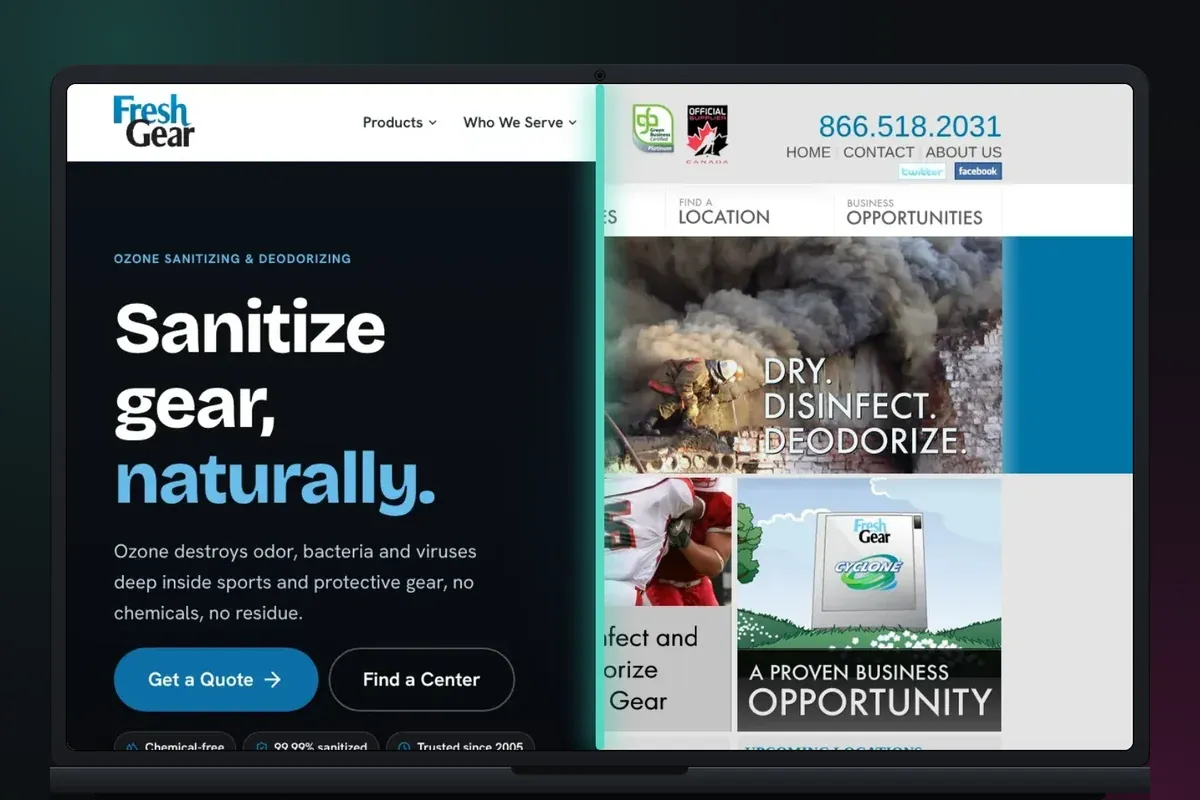
A professional website built to capture urgent pest searches and convert panicked homeowners into booked treatments fast. Mobile-ready and built to rank.
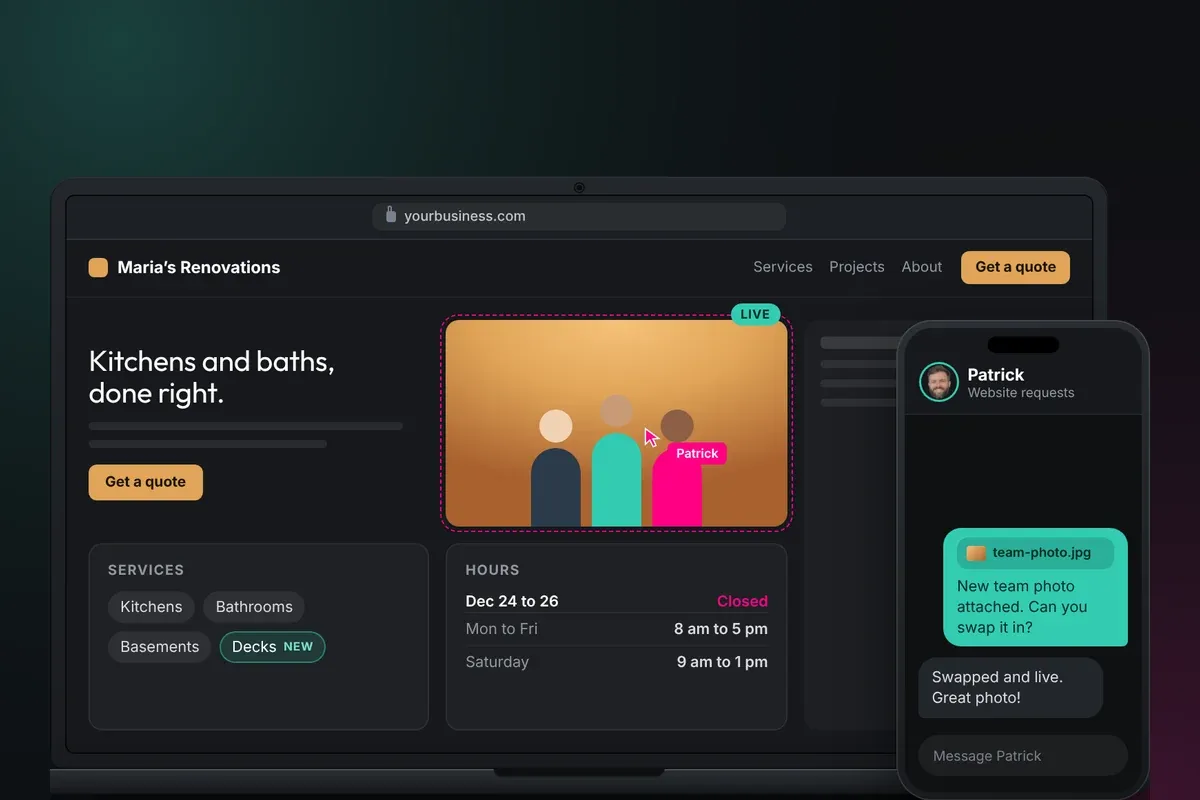
We keep your site secure, updated, and available around the clock every month. Hosting, maintenance, and monthly reports all included.
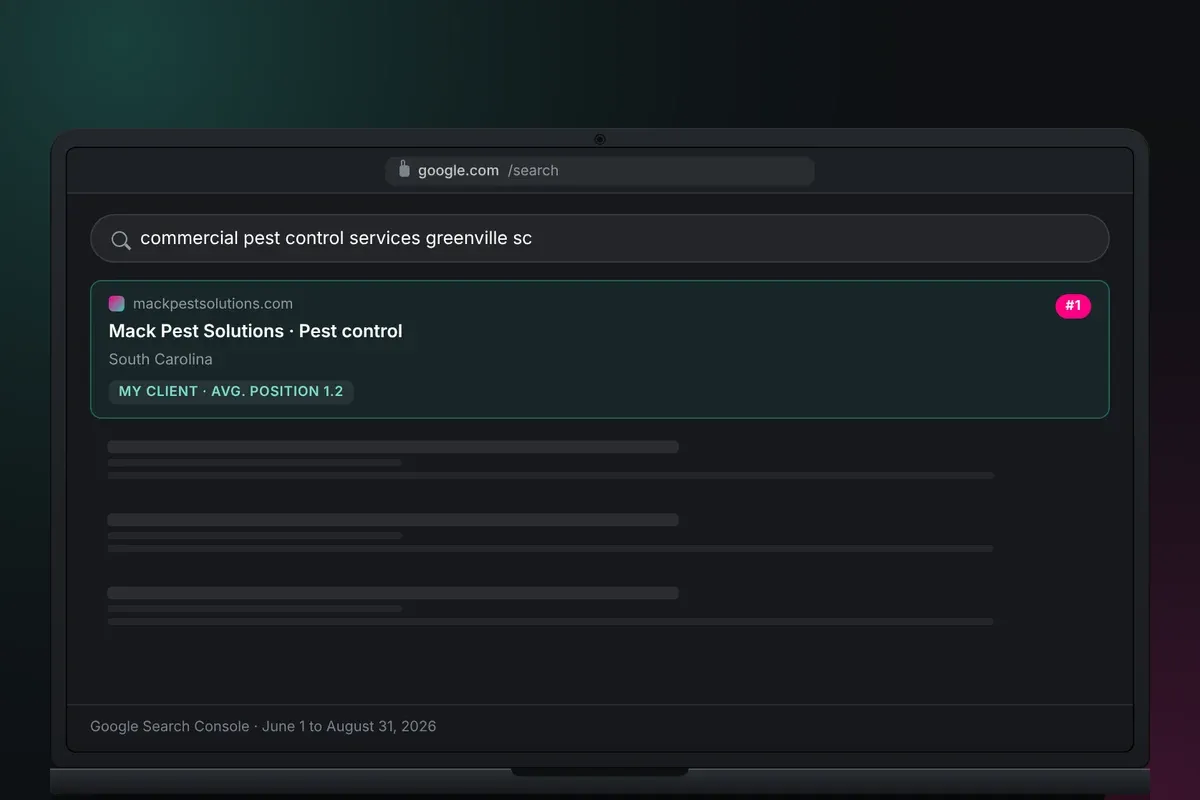
On-page SEO built in from the start so your business shows up first when homeowners are desperately searching for pest control nearby.
Every site includes on-page SEO, custom emergency contact forms, automated review collection, speed optimization, and uptime monitoring. Everything a pest control company needs to capture panic searches and convert homeowners into booked treatments, built in from day one.






























Ask a pest control web designer what a site costs and watch them reach for a calculator. Ours is $95 a month, all of it included, with nothing to pay upfront. The site belongs to you from the first month, so start generating emergency calls and service contracts on day one and leave whenever you like.
How much do I pay today?
$0 to build. Design, words, illustrations, SEO, launch. Your first $95 is your first month, and you don’t pay a cent before your website is live and working for you.
Your first month. Nothing before it.
Is it really one number?
No Basic, Pro or Business. The $95 covers the build, hosting, on-page SEO, unlimited updates, monthly reports and direct access to Patrick. There’s no plan above it, because there isn’t one.
Do I actually own it?
Your domain, your design, your words, your data. The site belongs to you from the first month. Stay because you want to, not because you’re paying something off.
What if I want to leave?
No contract, no lock-in, no exit fee. We have to earn it again every 30 days, which is exactly the point. Go ahead and press the button.
Go on, press it.
That’s it. That’s the whole cancellation.
Your truck wrap costs more and reaches far fewer people. Get started and get in front of homeowners who are searching for an exterminator right now.
One plan, because you should not have to study a comparison table to buy a website. Every feature below is included from day one.
$95/month
$0 to build. No contract. Cancel anytime.
Your website is yours from day one.
Imagine what you could accomplish with more than just a Home, About and Contact page.
Hand-coded and served from data centers around the world, not a page builder dragging its own weight around. Fast on any phone, on any connection.
No junky stock photos or cookie cutter icons here.
Great copywriting is the difference between a website that sells and one that doesn't.
Essentially this means making it as easy as possible for Google and AI to find you.
Forms that actually convert visitors into leads.
Plain, simple, straightforward, valuable analytics anyone can read.
Local SEO requires hyper-local intent targeting. Almost every service-based business needs this!
Blogs are awesome if they are used authentically. The age of purely info-based content is over.
We can integrate your social media content directly into your website. Strategically, of course. We don't want visitors getting distracted!
Automatically add new reviews from review platforms (Google, Yelp, etc) directly into your website.
Let visitors book meetings, sessions and appointments directly through your site.
Email newsletters help turn your visitors into subscribers.
Your Privacy Policy and Terms and Conditions are generated by a specialist legal-policy service and update automatically as privacy laws change. Included, with nothing for you to maintain.
We connect your forms to the CRM you already use: HubSpot, Salesforce, Zoho and most other software that connects with outside apps. A custom system gets its own scope.
Automations that send each new lead to the right person, log it in your spreadsheets and handle the follow-up.
Not all hosting is created equal. If you want the Taco Bell of web hosting, Bluehost is waiting for you.
Changes to hours, photos, text and services are included. Routine edits have a 72-hour target; larger requests get an agreed scope and completion date.
No call centers, no offshoring, just your friendly neighborhood Patrick. Based in North America, native English speaker, and fluent in Spanish if that is easier for you.
Here is exactly how we go from zero to a live pest control website.
There's exactly one, and everything is in it. Tap the button, check out securely, and you're done in about two minutes.
No questionnaire. We research your business online and ask only for missing details or access. You review the site before it goes live.
Design, words, photos, SEO, forms, speed. We do all of it, and you see it before anyone else does.
We point your domain at our servers, handle every technical detail, and flip the switch.
Updates, fixes, reports, security, backups. Every month, for as long as you're with us, at no extra cost.
Practical advice on building, improving, and growing your pest control business's online presence.
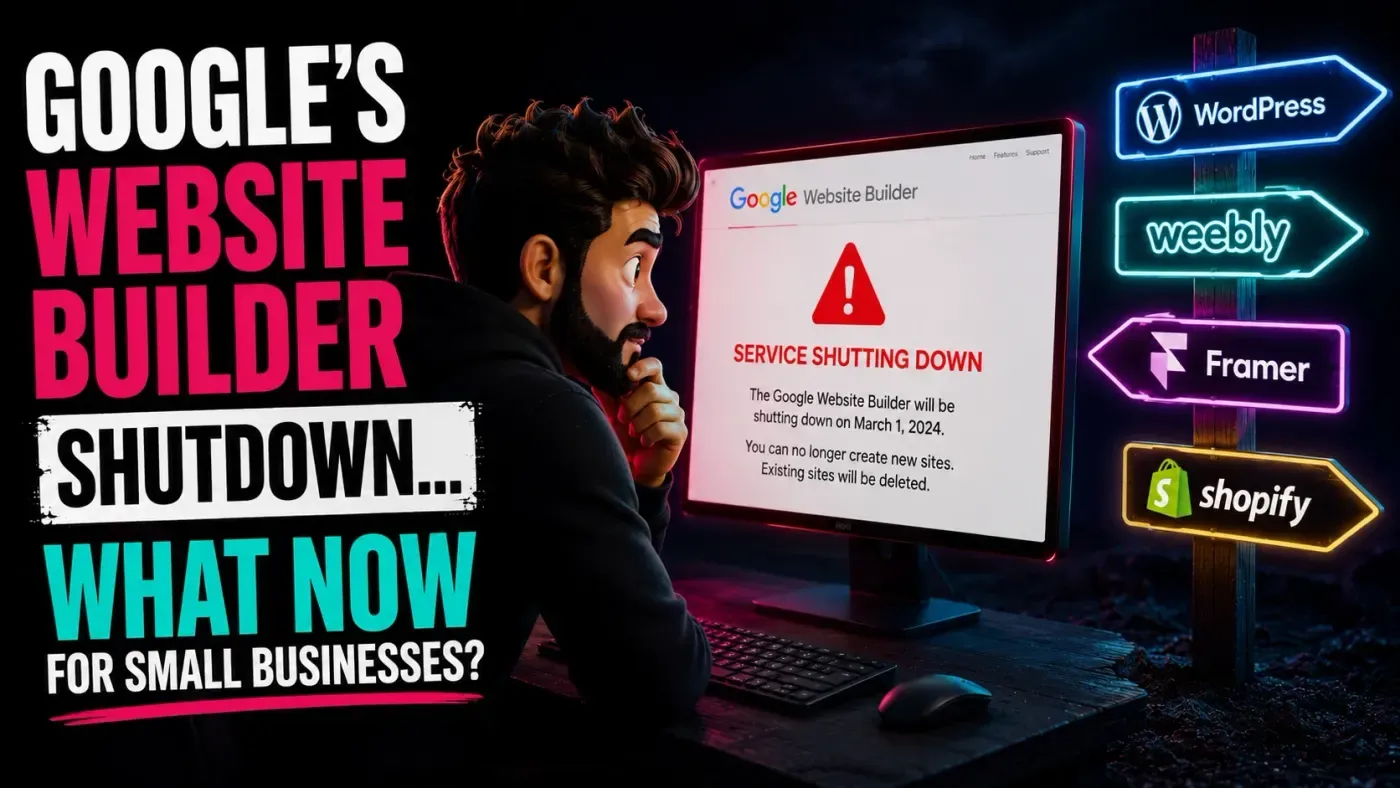
Understand your options after Google’s Website Builder closes. Review top alternatives and strengthen your small business’s online presence.

Learn why the Launchers Web Design Community is shutting down, what led to this decision, and how it affects current and future members.

An honest look at what went right, what went wrong, and the surprises that shaped a web design business in 2020. Find takeaways for a smoother path forward.
Everything you want to know about getting a website built for your pest control business.
Make your emergency number massive with click-to-call on mobile. When someone discovers bed bugs or termites, they want help TODAY. Bury your phone number and they're calling your competitor instead.
Show starting prices for common treatments. 'General pest control from $75,' 'Termite treatment starting at $500,' 'Bed bug removal from $300.' Helps qualify leads and sets expectations upfront.
Yes. People search 'what bug is this' constantly. Photos and descriptions of common pests (ants, roaches, bed bugs, termites, rodents) help them identify problems and establish you as the expert.
Offer both. One-time for emergencies, subscriptions for recurring prevention. Monthly or quarterly plans create predictable recurring revenue. Make both options clear with different pricing structures.
Emergency contact info and service area map. Pest problems are urgent and local. If people can't immediately see you serve their area and get your emergency number, they're moving on.
Absolutely critical. When someone discovers bed bugs or sees termites, they're panicking and calling from their phone immediately. If your mobile site is broken, you lose emergency calls.
Big companies have rigid scheduling and high turnover. You're local, responsive, and the same tech comes every time. Personal relationships and fast response beat corporate efficiency.
Yes, for identification purposes. 'Common Pests We Treat' with photos helps people identify their problem. Some people are grossed out, but accurate identification brings qualified leads.
Yes. Create distinct pages. Homeowners and facility managers have different needs and search differently. Service-specific pages rank better and attract qualified leads for each audience.
If you offer green pest control, make it prominent. Many homeowners with kids and pets want safer treatments. Eco-friendly positioning attracts clients willing to pay premium for safer methods.
Still researching? Smart move. Patrick explains our commitment in 90 seconds. Transparency, straight answers, and zero surprise fees. That's how we roll.
Call Patrick Now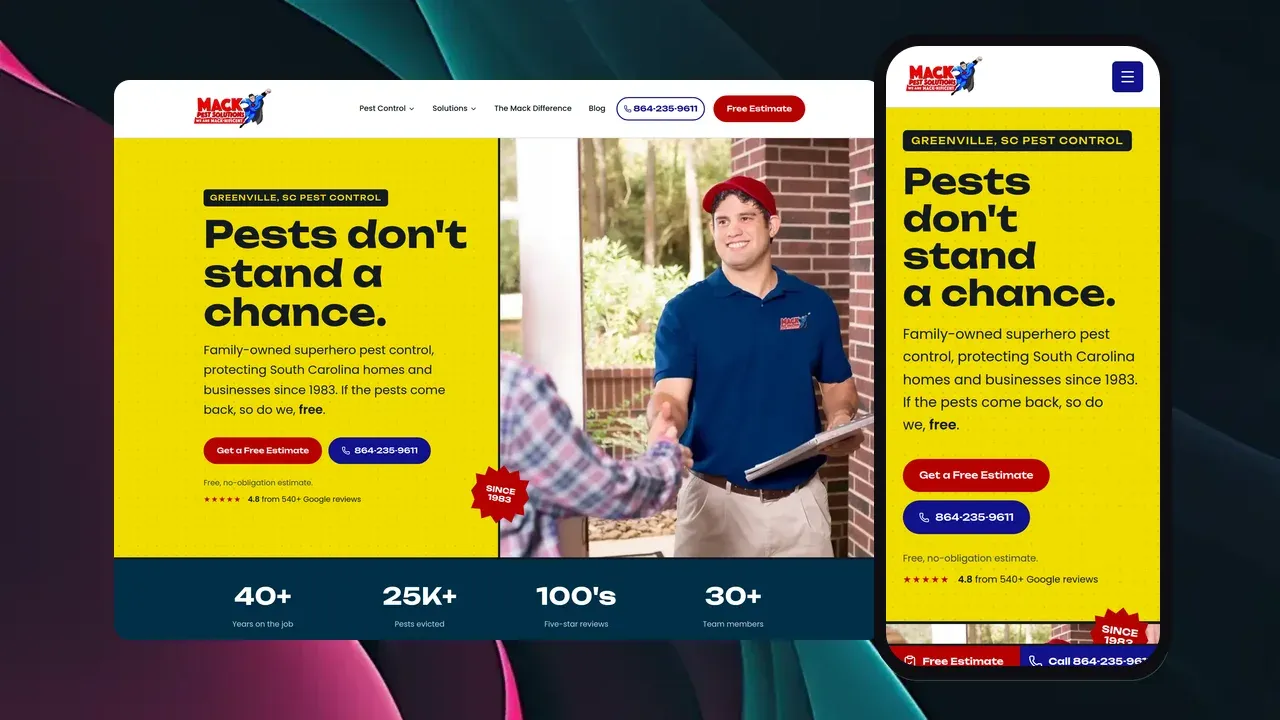
















 Sent to you for review